



Exploring the Parallels
Speculative fiction has been a powerful tool for exploring the effects of technology on society. In this context, the series \”Electric Dreams\”, inspired by the works of Philip K. Dick, and \”Black Mirror\” stand out as visionary works that invite us to reflect on the impact of technology on our daily lives. In addition, Pierre Lévy's theories on the information society offer a philosophical perspective on these issues.
Philip K. Dick and Electric Dreams
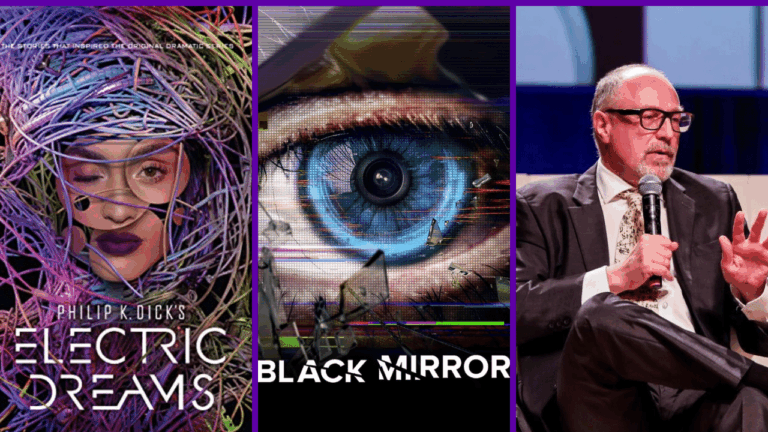
Philip K. Dick was one of the most renowned science fiction writers, whose works explored themes such as identity, reality and the influence of technology on human life. The \”Electric Dreams\” series features adaptations of his short stories, exploring narratives that challenge our understanding of reality. Each episode of \”Electric Dreams\” plunges the viewer into a journey full of questions about the nature of existence and the impact of advanced technologies on our lives.
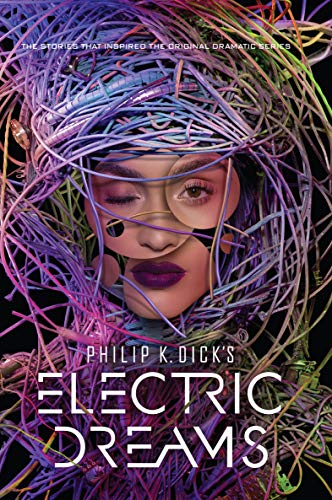
Philip K. Dick's stories often feature protagonists with ordinary lives who are confronted with extraordinary events that challenge their perception of reality. In \”Electric Dreams\”, we are transported to alternative worlds in which technology plays a fundamental role in transforming the lives of the characters. These narratives invite us to question the nature of reality and explore the ethical and existential dilemmas that make us rethink our own existence.
Black Mirror: Dystopian Reflections
While \”Electric Dreams\” explores the impact of technology in a more speculative context, \”Black Mirror\” offers a dystopian vision of the effects of technology on our contemporary society. The series, created by Charlie Brooker, features independent episodes, each exploring a stand-alone story with disturbing technological elements, but which each day comes closer to reality, dystopia aside.
\”Black Mirror\” exposes the dark aspects of the highly connected society we live in, questioning the irresponsible use of technology and its unforeseen side effects. The series tackles topics such as privacy, technological dependency, artificial intelligence and virtual reality, offering a provocative vision of a not-so-distant future. Each episode of \”Black Mirror\” serves as a mirror reflecting the dangers of a society that values technology above all else.
Pierre Lévy and the Theories of Society in the Information Age
Pierre Lévy, one of the main theorists of the information society, provides a conceptual basis for analyzing the social implications of technology. His theories emphasize the importance of collective intelligence and the active participation of citizens in the process of building knowledge.
Lévy argues that technology is transforming the way we interact and share information, creating an increasingly connected society. He explores concepts such as cyberculture, collective intelligence and shared virtual spaces, inviting us to reflect on how these transformations affect our perception of reality and our social interactions.
Connections between Electric Dreams, Black Mirror and Pierre Lévy's Theories
Drawing parallels between \”Electric Dreams\”, \”Black Mirror\” and Pierre Lévy's theories, we find interesting points of convergence and divergence. Although the works essentially address the social implications of technology, each has a unique approach.
In \”Electric Dreams\” and \”Black Mirror\”, we see a common interest in the nature of reality and how technology can distort it. Both series invite us to question our perception of reality and reflect on the role that technology plays in this process. While \”Electric Dreams\” delves into speculative and more philosophical narratives, \”Black Mirror\” takes a dystopian and often dark approach, revealing the dangers of irresponsible use of technology. Increasingly, the two works come frighteningly close to the present day. We live on a fine line between dystopia and our sweet dreams that technology won't make us less human, more controlled and less authentic.
Pierre Lévy's theories provide a conceptual framework for analyzing the social impacts of technology more broadly. He reminds us of the importance of active participation and collective intelligence in the information society. Lévy emphasizes the need to develop a critical awareness of technological transformations and the creation of shared virtual spaces that allow for the collaborative construction of knowledge.
Reflections on the Future
By exploring the parallels between \”Electric Dreams\”, \”Black Mirror\” and the theories of Pierre Lévy, we are confronted with fundamental questions about our own existence and the impact of technology on our society. These works challenge us to question the boundaries between reality and fiction, exploring the influence of technologies on our lives and our perception of the world.
While \”Electric Dreams\” makes us reflect on the nature of existence and the limits of reality, \”Black Mirror\” warns us about the dangers of a society that is overly dependent on technology. Pierre Lévy's theories invite us to embrace collective intelligence and actively participate in the construction of knowledge.
Our future
By exploring the parallels between Philip K. Dick's \”Electric Dreams\”, \”Black Mirror\” and Pierre Lévy's theories, we are confronted with the challenges and possibilities that technology brings to our society. These works invite us to reflect on the impact of technology on our lives, highlighting both the dangers and the opportunities that come with technological advancement.
As we move towards the unknown, it is important to remember that we are the architects of our own destiny. We must become active participants in the process of building a future in which technology is an ally for human progress, rather than an obstacle to our humanity. By exploring the parallels between \”Electric Dreams\”, \”Black Mirror\” and Pierre Lévy's theories, we have the opportunity to question and reflect on our role in this new digital age.
In short, Philip K. Dick's \”Electric Dreams\” and \”Black Mirror\” series, together with Pierre Lévy's theories, invite us to explore the parallels and divergences between them, providing an in-depth look at the impacts of technology on contemporary society. By challenging us to question the nature of reality and the impact of technologies on our lives, these works offer us a unique opportunity for reflection and self-awareness.
I hope this article has provided you with a comprehensive overview of the parallels between Philip K. Dick's ”Electric Dreams” series, ”Black Mirror” and Pierre Lévy's theories. May you continue to explore and reflect on the impacts of technology on our society, promoting a healthy and conscious relationship with technological innovations.